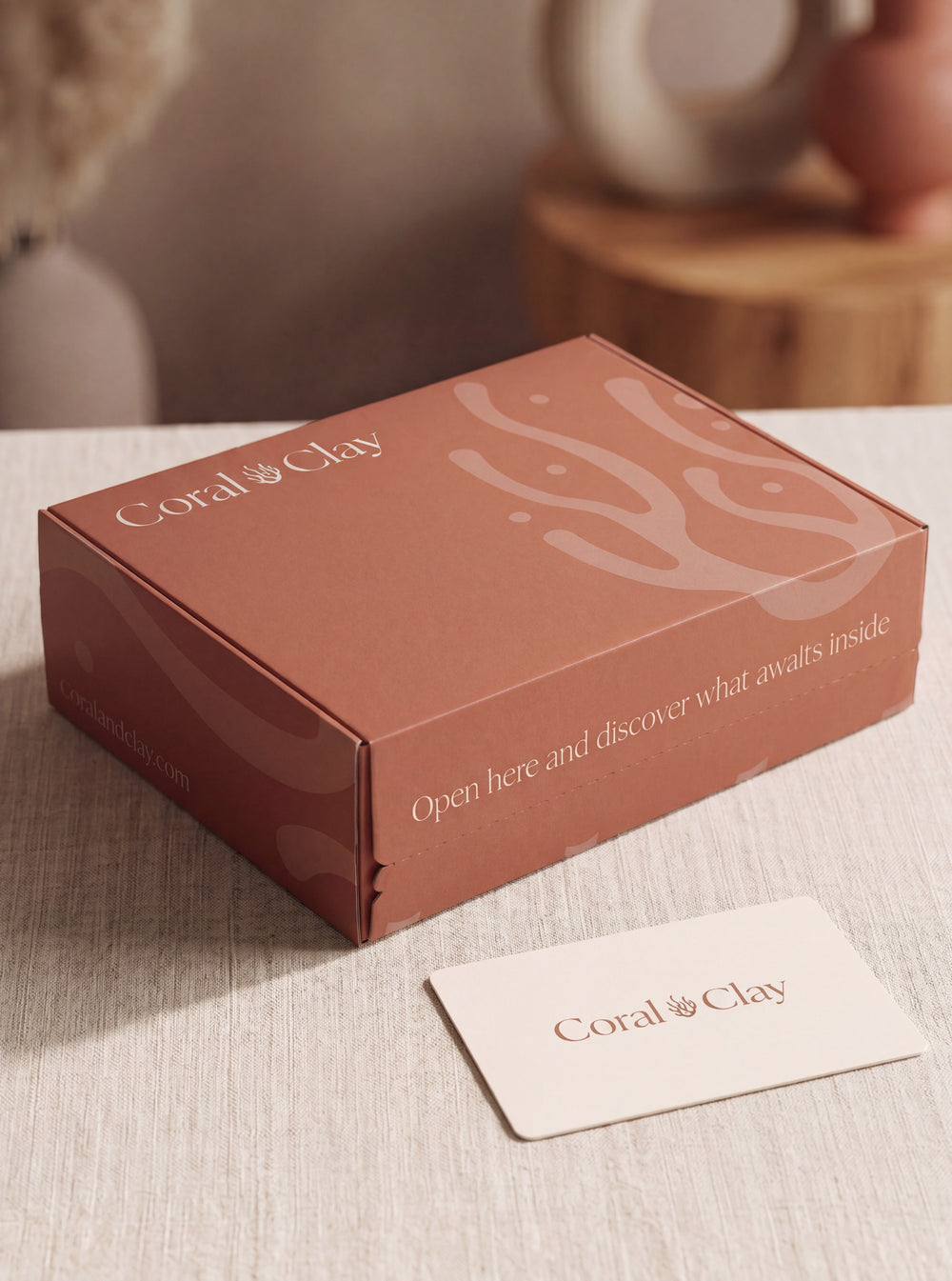
For corporate Christmas gifts arriving in December 2026, begin the planning conversation in July or August if you want custom products or fully branded packaging. Use September to approve the brief and concepts, October for final product and artwork decisions, November for production and packing, and early December for delivery with a sensible buffer. Smaller projects using available products and standard packaging may need less time, but Christmas demand makes late decisions harder to recover from.
This is a planning guide rather than a list of gift ideas. For product and concept inspiration, see our separate guide to corporate holiday gift ideas.
A practical 2026 Christmas-gifting timeline
The dates below are sensible working targets, not guaranteed supplier or carrier deadlines. Quantity, product availability, artwork approvals, packaging, destination and whether gifts go to one address or many can all change the schedule.
| When | Decision to complete | Why it matters |
|---|---|---|
| July–August | Define audience, occasion, quantity, overall budget and delivery model | These choices determine which suppliers and formats are realistic |
| September | Approve the brief, shortlist concepts and collect brand assets | It prevents a coordinator from circulating too many undefined options |
| October | Approve products, packaging artwork, card copy and recipient variants | Production and product purchasing should follow a clear written approval |
| November | Complete production, sourcing, address validation and packing | Problems are easier to resolve before the December carrier peak |
| Early December | Dispatch with a buffer and monitor delivery exceptions | A gift arriving slightly early is usually better than one arriving after people leave |
Fully printed packaging normally requires approximately two weeks of production after the design is approved. Concept development, sourcing, packing and delivery sit around that production period, so two weeks should never be treated as the total project lead time.
Decide what the programme is meant to do
“Send a Christmas gift” is not yet a useful brief. Decide who should receive it and what the gesture should express.
- Employees: recognition and inclusion across a broad group.
- Clients: appreciation that fits the relationship without creating pressure or obligation.
- Partners and suppliers: thanks for a year of collaboration.
- Leadership or VIPs: a smaller programme where exceptional quality and personal relevance matter more than item count.
- Event guests: a concept connected to the occasion and practical to distribute or carry.
Keep these groups separate in the briefing. A suitable employee gift may not be appropriate for a regulated client relationship, and a high-value VIP gift should not quietly become the default for every recipient.
Build an all-in budget before choosing products
A per-recipient product budget is only one part of the cost. An accurate working budget should include:
- products and any product-specific personalisation;
- box, filler, wrapping, card and other presentation materials;
- packaging design and printing;
- packing and project handling;
- delivery to one address or individual recipients;
- VAT and the organisation’s expected tax treatment;
- a contingency for address corrections, substitutions or returned parcels.
When the budget is tight, reduce the number of products before replacing strong products with several weak ones. A smaller, coherent selection with a proper card and considered presentation often feels more generous than a crowded assortment chosen mainly by unit price.
Employee gifts and the Dutch WKR
For employers in the Netherlands, a Christmas gift can fall within the werkkostenregeling (WKR). The Dutch Tax Administration states that the 2026 discretionary margin is 2.00% of taxable payroll up to € 400,000 and 1.18% above that amount. Spending above the available margin can lead to an 80% final levy. Check the organisation’s remaining margin and the precise treatment with payroll or a tax adviser before approving the programme. See the current WKR guidance from the Dutch Tax Administration.
VAT on gifts and staff benefits
VAT deductibility follows separate rules. The Dutch Tax Administration currently applies a threshold of € 227 excluding VAT per recipient per financial year for gifts, business gifts and staff benefits. The calculation can include other relevant spending on the same person during the year, so do not assess the Christmas gift in isolation. Review the official VAT threshold guidance. This article is planning information, not tax advice.
Write a brief that suppliers can actually answer
A useful corporate Christmas-gift brief contains:
- number of recipients and whether the figure is final or estimated;
- employee, client, partner or VIP audience;
- budget per recipient and total approved budget;
- desired feeling or theme, plus products to include or avoid;
- branding requirements and available logo or brand-guideline files;
- one delivery address, several offices or individual home addresses;
- destination country or countries within the EU;
- required arrival window;
- dietary requirements, alcohol restrictions and known sensitivities;
- the final approver and an internal approval date.
Ask for a small number of complete concepts rather than an unlimited catalogue. Too many individual choices slow internal approval and make it harder to compare quality, presentation and total cost.
Choose segmentation without creating unnecessary complexity
One concept can work well for a broad group when it avoids obvious exclusions and feels appropriate to the occasion. If one box cannot serve everyone, use a small number of clearly defined variants based on known needs: for example, alcohol-free, food-focused and non-food options.
Do not segment by gender as a default, and do not assume dietary requirements from names or backgrounds. Collect only information the project genuinely needs, explain how it will be used and set a clear deadline for changes.
Plan branding for the recipient, not only the sender
Christmas packaging can express a company’s identity without turning the gift into promotional merchandise. A coherent palette, carefully placed logo, appropriate message and useful branded item are usually stronger than repeating a large logo across every surface.
Approve the full experience together: box exterior, interior, card, filler, product arrangement and any merchandise. A digital mock-up helps stakeholders review the direction, but it is not a physical sample. A custom-branded physical sample is not a routine option and should not be built into the schedule unless it has been confirmed in writing for the specific project.
For more detail on artwork and presentation choices, see our guide to branded gift boxes.
Treat address collection as an operational project
For individual delivery, decide who owns the recipient list, how addresses will be collected, who may access them and when the list becomes final. Names, home addresses, email addresses and telephone numbers are personal data. The European Data Protection Board advises organisations to process only data that is necessary and proportionate for the intended purpose. See its data-protection guidance for small businesses.
Validate the country, postcode, house number, unit information and recipient name before handover. Keep a controlled record of corrections and decide how returned parcels will be handled. If gifts go to an office or venue, confirm receiving hours, a named contact and the exact handover point.
Account for cross-border EU delivery
A single programme can include recipients in several EU member states, but product and delivery feasibility still need checking by destination. Alcohol, food, carrier services, address formats, timing and VAT treatment can differ. Do not assume that a concept suitable for the Netherlands can be sent unchanged to every EU destination.
Coral & Clay supports corporate delivery within EU member states. We confirm destinations, timing, contents and delivery model for each proposal; non-EU destinations such as the UK and US are outside the current delivery scope.
Final approval checklist
- The audience, message and recipient groups are explicit.
- The budget includes products, presentation, handling, delivery, VAT and contingency.
- Payroll or tax specialists have checked WKR and VAT treatment where relevant.
- Products and substitutions are approved in writing.
- Artwork, card copy, spelling and brand assets are final.
- Dietary, alcohol and fragrance constraints are recorded accurately.
- The recipient list has an owner, secure transfer method and freeze date.
- Every destination is within scope and has a realistic delivery buffer.
- One person has final approval authority.
Illustrative example: a Christmas programme across 3 locations
This is an illustrative scenario, not a client case study. Consider a programme for 120 recipients: employees in the Netherlands, one office elsewhere in the EU and a smaller group of remote workers. A practical plan would set one core concept, a limited number of preference-led variants and separate delivery routes for each office and home addresses.
The project owner would freeze the recipient list and branding on agreed dates, keep a reserve for late changes, and assign one local contact per office. That gives the supplier a stable production brief while leaving a controlled route for address corrections and genuine exceptions.
Planning a 2026 corporate Christmas programme
Coral & Clay develops custom corporate gift concepts around the audience, budget, brand and delivery requirements. We can coordinate product selection, fully printed packaging, selected branded merchandise, packing and delivery within EU member states, subject to project-specific availability and timing.
To begin, request a corporate Christmas proposal with the quantity, audience, budget, branding requirements, desired arrival date and delivery countries. We will confirm the practical options and schedule for the project.