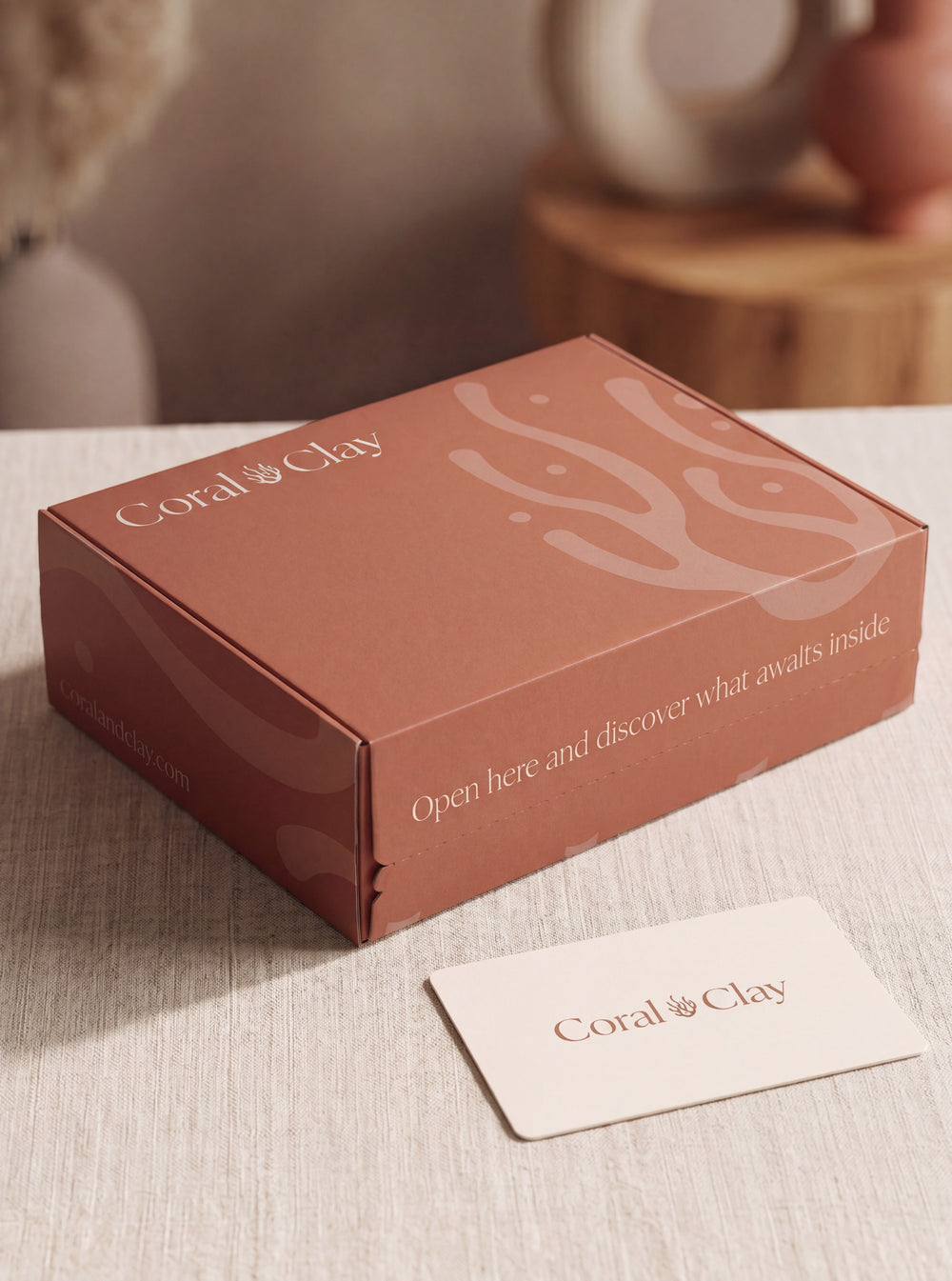
Corporate gifts feel personal at scale when the programme uses a few meaningful differences, not when every box becomes a separate project. The goal is to identify which details matter to the recipient and standardise everything they do not need to notice.
A strong programme might use one approved packaging system, three audience concepts and individual cards. That creates relevance while keeping sourcing, approvals and fulfilment under control.
Choose the right level of personalisation
| Level | What changes | Best suited to |
|---|---|---|
| One concept | Name and message only | A cohesive employee or event audience |
| Segmented concepts | Contents vary by role, region or relationship | Mixed clients, employee groups or campaign tiers |
| Controlled recipient choice | Recipient selects from two or three approved routes | Dietary, alcohol, fragrance or practical preferences |
| Individual curation | Concept is built around one named recipient | VIP, executive or significant milestone gifts |
Use the simplest level that answers the real need. A high-volume programme rarely benefits from hundreds of unrelated concepts; a VIP gift may feel impersonal if only the name changes.
Segment by a useful reason
Good segments change the recipient experience. Examples include:
- office-based and remote employees with different delivery needs;
- client teams and individual decision-makers;
- event speakers, general attendees and hosts;
- food, alcohol-free or fragrance-free routes;
- Netherlands and other EU destinations with different logistics;
- milestone values governed by a clear internal policy.
Avoid segments based on stereotypes about age, gender, nationality, job seniority or family status. If a difference does not change the gift usefully, it probably does not belong in the programme.
Personalise the message first
A specific card often creates more meaning than a different product. Give message writers a short structure:
- name the relationship or occasion;
- refer to one real contribution, project or moment;
- explain why it mattered;
- close with an appropriate wish and named sender.
Set a character limit and proofing deadline. Use a template for structure, not for the final sentence. Names, accents, roles and client references need a separate approval pass before printing.
Use controlled choice
A recipient-choice marketplace can weaken curation and create a large service burden. A more manageable approach is a small set of complete concepts, each designed to feel equally considered.
For example, a programme might offer:
- a food-and-drink experience;
- an alcohol- and fragrance-free home or desk route;
- a compact letterbox option where the delivery format matters.
Do not label one option as the “standard” and another as the “special diet” box. Present routes neutrally and make their value and presentation comparable.
Collect less data, more accurately
Names, addresses, language, selected concept and delivery timing may be necessary. Detailed personal profiles usually are not. The European Data Protection Board states that personal data should be adequate, relevant and limited to what is necessary, with appropriate access controls and deletion of obsolete information. See its guidance on securing personal data.
Use one controlled source list, a named data owner and clear cut-off. Restrict access to people who manage the campaign, and transfer only the fields a fulfilment partner needs. Correct addresses before dispatch and define when temporary working files will be removed.
Build the programme in layers
- Core brief: purpose, audience, budget, destinations and arrival window.
- Experience system: packaging, card format and shared quality standard.
- Segments: the few audience differences that change the concept.
- Personal layer: name, message, language and approved choice.
- Operations: sourcing, production, data, packing and delivery ownership.
- Exceptions: late additions, returns, missing choices and substitutions.
Coral & Clay’s online collection is a starting point rather than the limit of a corporate project. We develop custom concepts and can source suitable products through our supplier network, subject to budget, quantity, timing, destination and availability.
Keep branding proportionate
Use the brand system to connect the experience: colour, typography, card, insert and selected merchandise. A large logo on every product can make the recipient feel like campaign reach rather than a person.
Fully printed packaging normally becomes commercially sensible at approximately 10–20 boxes, depending on the project. Production usually needs around two weeks after design approval, excluding concept development, sourcing, packing and delivery. Confirm the schedule for each proposal.
See our branded gift-box options for current presentation routes.
Control substitutions and exceptions
Agree whether substitutions are allowed, who approves them and what makes an alternative equivalent. A product should not be replaced simply because it has a similar price; purpose, quality, dietary information, dimensions and presentation also matter.
Route exceptions to one owner:
- recipient misses the choice deadline;
- address fails validation;
- product becomes unavailable;
- start date or event date changes;
- parcel is returned;
- late recipient is added after production.
Final scale test
- Every segment has a clear recipient benefit.
- Options feel equally considered.
- Messages contain real details and have been proofread.
- The data set is necessary, accurate and access-controlled.
- One approved list governs production.
- Branding supports the experience without dominating it.
- Substitutions and exceptions have named owners.
- The schedule includes sourcing, production, packing and EU delivery.
A real example of consistency across locations
For 2 Qualtrics conference-speaker orders in May and June 2026, approximately 50 gifts used the same selected contents while delivery was consolidated to event locations in Amsterdam, Munich and Paris. The later Munich and Paris order also used fully white-labelled packaging with coordinated brand details.
This is the useful distinction at scale: standardise the elements that protect quality—contents, presentation and packing instructions—while treating destination contacts, delivery windows and handover details as location-specific data.
Plan a personalised corporate programme
We design corporate gift-box programmes around the audience, occasion, budget, brand and delivery requirements, with corporate delivery in EU member states.
Request a corporate proposal with your audience segments, quantity, budget, timing, branding needs and destinations. We will recommend the simplest personalisation model that achieves the intended experience.